New Life After Fire
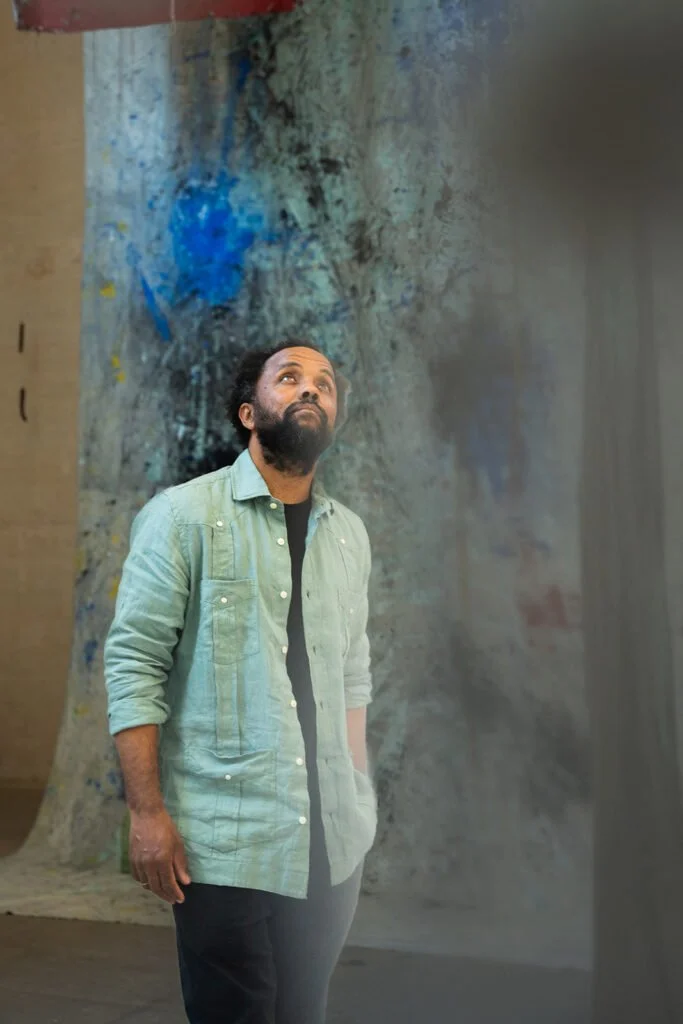
Photos: Eva Plasencia.
Fundación Miró +info
Roland Groenenboom writes:
“Carlos Bunga once witnessed a Yaqui Easter ceremony in Arizona in which the demon masks, painstakingly handmade during the year leading up to the celebration, were burnt at the end of the ceremony, so that new ones had to be produced for the following year. This powerful experience and imagery took root in Bunga’s brain, like a seed that remains dormant under the ashes after a bushfire until its moment has come to sprout. If a seedling is nurtured and fed, it may come to fruition. And so it did for Bunga, informing his project for Miró Mallorca, whose exhibition period coincides with the celebration of the Feast Day of Saint John. Saint John’s Eve, on 23 June, aligns closely with the summer solstice, the year’s longest day and shortest night. For centuries, agricultural societies marked this moment with fire rituals to usher in summer, ensure bountiful harvests, promote fertility and ward off evil spirits. Fire was also believed to purify and bolster the sun’s strength.
We have to acknowledge, though, that fire the destroyer also has a place in this world. Nevertheless, it is Bunga’s belief that destruction (a word he avoids at all cost) never means the end of something but rather a new beginning. When Joan Miró’s World Trade Center Tapestry (1974) fell prey to the fire and rubble to which the ‘Twin Towers’ were reduced after the attacks of 9/11, it was the end of the tapestry. But 9/11 also marked the beginning of a new era, ushering us further into the complex and divided world we live in today, in which the reciprocal act of taking and giving of our ancestors has been replaced by the relentless corporate exhaustion (often with governmental backup) of whatever Mother Earth possesses that is of human (and the neglected more-than-human) interest. Not all transformations are for the better.
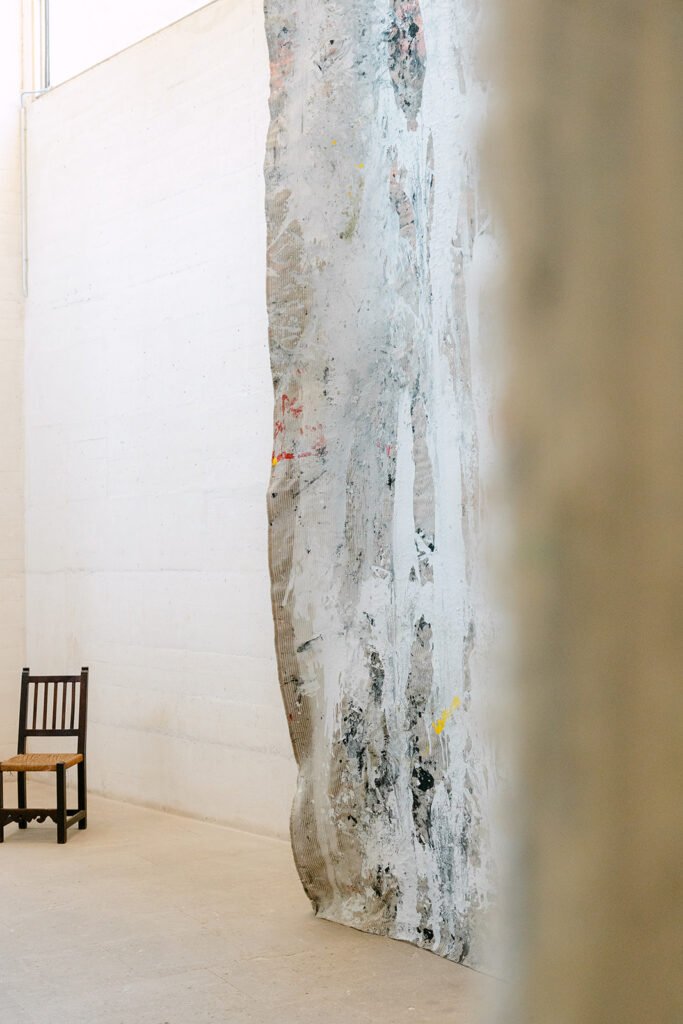
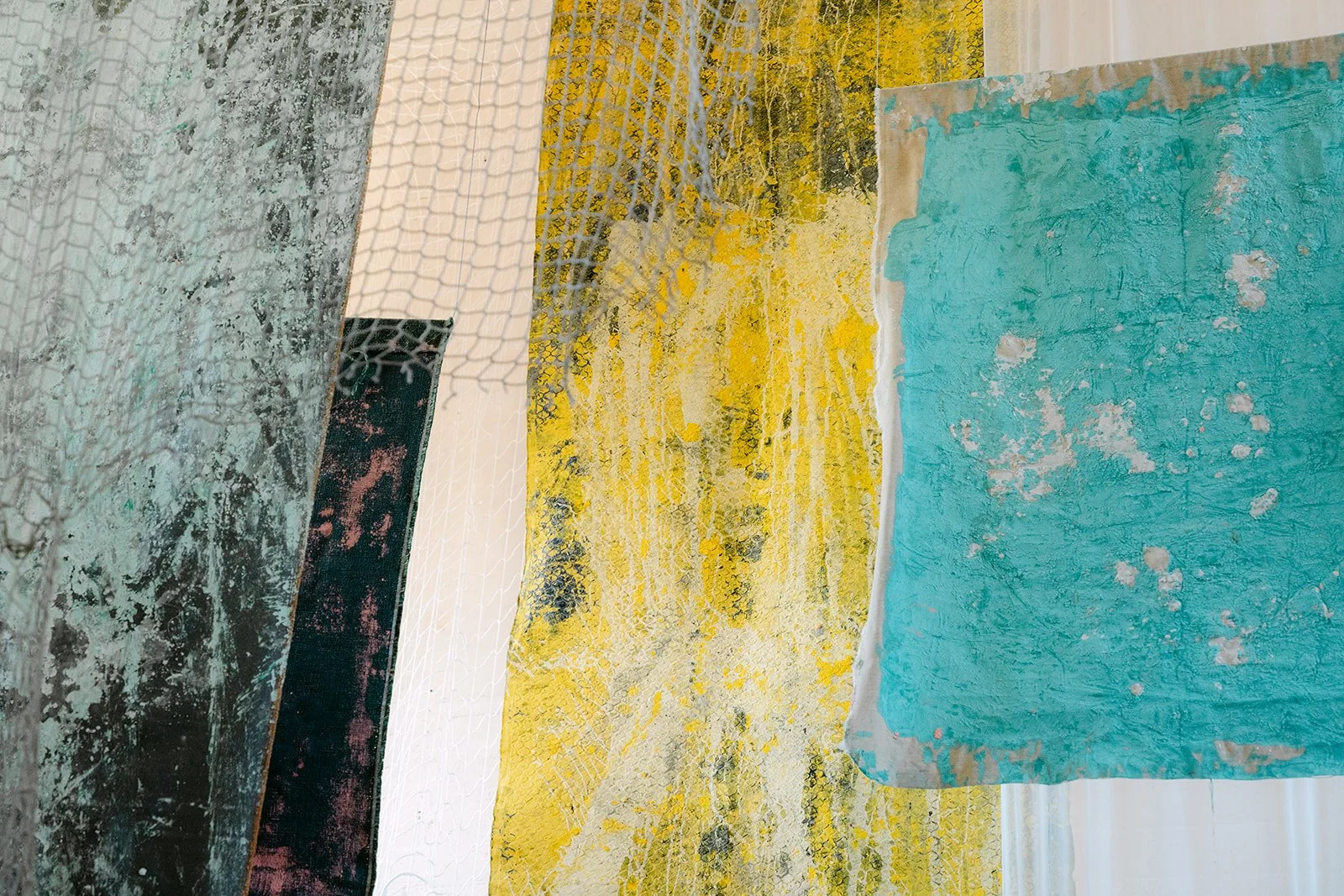
Writing about an exhibition by Carlos Bunga months before it is held is like writing a review of the upcoming album from your favourite band without having heard anything about it except some faint rumours, let alone the music itself. Bunga’s projects are subjected to thorough research and preparations by the artist and the resulting exhibition, and any new works created for it, mostly come into being further on in the process, often quite soon before the opening. For his project at Miró Mallorca, Bunga is interested in weaving traditional everyday objects and crafts into his exhibition, like the objects Miró had lying around in his houses and studios, as well as reflecting Miró’s interest in the process and possibilities of crafts such as tapestry making. Having talked with Bunga about the powerful image and connotations of fire and its different uses and symbolic meanings, it seems clear to me that it will play an important role in the project. Exactly what this fire will transform, regenerate and purify is currently a mystery. However, knowing the artist and his work, there will surely be new life after the fire, so that visitors can explore a before, its transformation, and an after.”
2026. Mallorca, Spain.
